
Enhanced Support for Pressure System Design
Highlights
- Many pressure system failures are design-related, not necessarily fluid-related.
- Engineers often lack formal pressure system training.
- WHA brings NASA-grade rigor to industrial systems.
- WHA’s newly formalized design review services help teams create safer systems from the start.
With over 35 years in the industry, WHA has established itself as a leader in investigating and analyzing the safety aspects of oxygen and hydrogen systems. Our experts have worked with numerous fuel gases and other hazardous fluids like hydrazine, nitrous oxide, acetylene, and synthesis gas.
Despite the real hazards associated with these gases, the decades have revealed an unassuming pattern: many pressure system failures don’t stem from exotic fuels or unique gas properties; they center around design oversights.
We spoke with WHA experts Dr. Harold Beeson, Brian Anderson, Gary Floyd, and Brad Forsyth to unpack the real gaps in pressure system design and learn how engineers can build safer, more effective systems.
When Things Go Wrong: Real-World Design Flaws
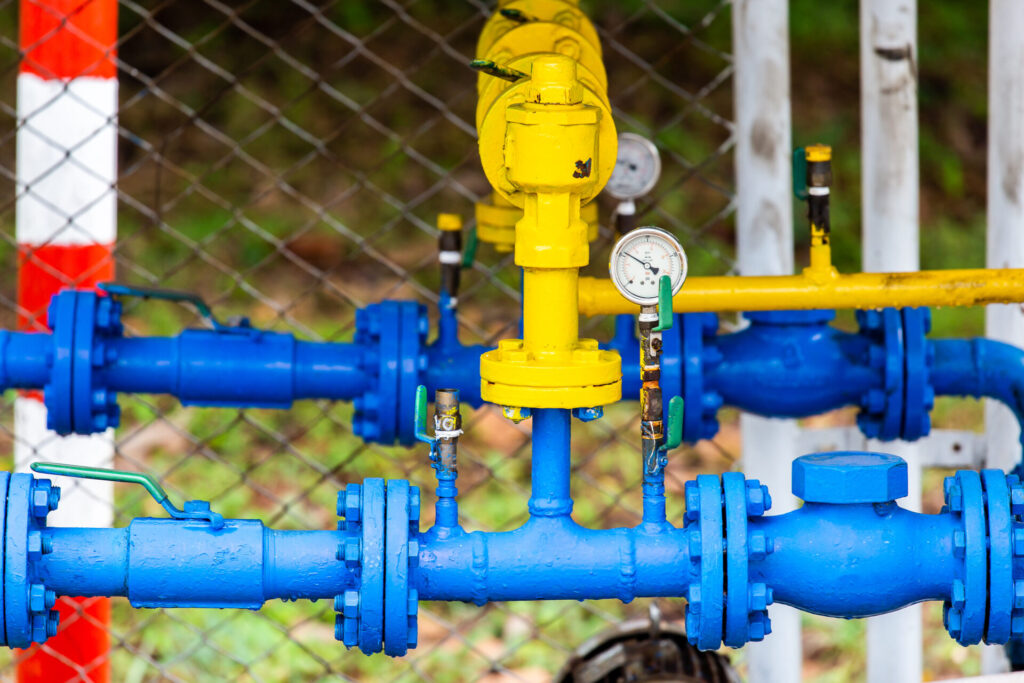
Recently, WHA was brought in to consult on a pressure system that had already reached production: a fill truck designed to deliver gas to customer sites.
On paper, the system appeared to be complete. Components were installed. Operators were trained. But the entire fill system was rated 1,000 psi below the intended operating pressure.
The design team had selected off-the-shelf components from a catalog, assuming compatibility based on generic specifications. They hadn’t performed a thorough pressure rating analysis, nor had they conducted an early code compliance review — a step that should ideally occur at the beginning, not the end, of the design process.
If deployed, the system could have failed under pressure or, at a minimum, required costly redesigns. Situations like this are surprisingly common, but they are also preventable.
The Knowledge Gap in Modern Engineering
“I graduated with a four-year engineering degree, and I’m pretty sure I never heard the words MAWP, design pressure, or relief protection,” shares Brian Anderson, senior mechanical engineer at WHA. Like many engineers, that practical knowledge didn’t come until later. He learned it on the job.
Gary Floyd, another WHA senior mechanical engineer, sees the same issue play out at companies large and small: “Few companies enforce the requirement of significant experience before designing systems, and that leads to inconsistent approaches in the industry.”
Without the right knowledge and systems, teams might have a full system design before they truly understand the design requirements. They might start ordering equipment before they’ve established appropriate pressure ratings.
These inconsistencies can result in extra time, duplicated efforts, wasted budget, and potentially dangerous situations.
“Most engineers are super smart. They just haven’t had the chance to get trained in pressure system design. It’s become increasingly clear that’s where we can really help.” – Brian Anderson, Senior Mechanical Engineer
WHA’s Approach to Pressure System Design
Many of today’s best practices for pressure system design can be traced back to NASA. That’s where many of WHA’s senior team members began designing and operating high-pressure systems for launch vehicles, ground support, and testing systems.
“Remember when you’re building a rocket, you’re building it one component at a time,” says Dr. Harold Beeson, WHA Principal Chemist, who built his career over 28 years with NASA. “You test those things at the materials level, the component level, and then at the system level.”
“NASA had a methodical approach that was fundamentally based on international standards, with their own spin,” adds Brad Forsyth, Principal Engineer and Failure Analysis Lead at WHA. “That’s the way we were all trained to design, build, and operate high-pressure systems.”
Today, WHA has added its own “spin” to these methodologies, adapting them to suit the pressures, volumes, and scale of industrial applications.
And at their core, these safety concepts are also firmly rooted in failure analysis — something WHA knows all about.
“A lot of what we’ve developed in terms of hazard analysis is based on failure,” explains Dr. Beeson. “When you see a failure, you do a kind of retroactive hazard analysis in order to understand the failure. It really is the same process.”
Brad agrees: “A lot of hazard analysis is simply considering failure fault modes so you can recognize them and plan for them ahead of time.”

Applying NASA-Grade Rigor to Pressure System Design
A solid design process starts with the fundamentals. WHA’s experts highlight a few best practices to incorporate on every project:
1. Start by Clearly Defining System Requirements: Before you sketch a layout or order parts, define your system’s purpose, operating environment, gas/fluid type, target pressures, flow rates, and protection needs. You can’t engineer what you haven’t fully defined.
2. Understand the Difference Between Operating Pressure and Design Pressure: Operating pressure is what your system will typically run at. Design pressure includes safety margins — and it’s what your components must actually be rated for. Confusing the two is one of the most common (and dangerous) mistakes we see.
3. Conduct a Code Compliance Review Early: Don’t wait until the design is 80% complete to think about compliance. Understanding applicable codes (like ASME B31.3 or API 520) early can prevent expensive redesigns and compliance failures later on.
4. Treat Codes and Standards as a Starting Point (Not the Finish Line): Codes represent the minimum. They’re not always up to speed with today’s high-performance or high-risk systems. WHA experts often work with systems that exceed code boundaries, and they apply engineering principles to close that gap safely.
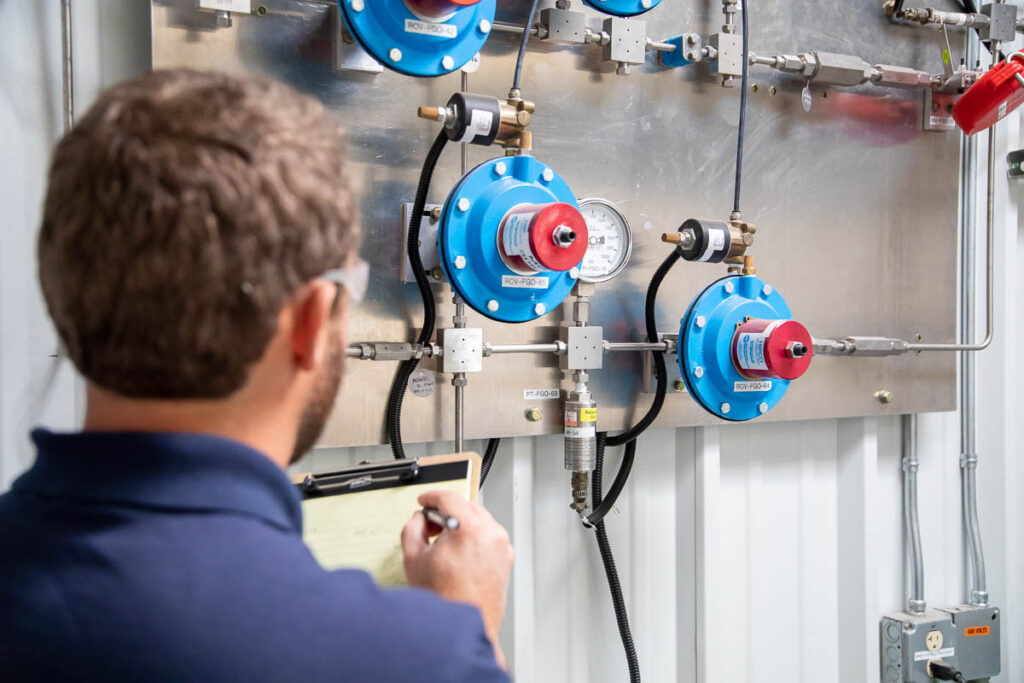
5. Establish Pressure Ratings System-Wide Before Selecting Parts: Before you order, confirm the required pressure ratings and make sure every single component in your system (valves, fittings, hoses, regulators, vessels) supports those values, with the appropriate safety factors.
6. Account for Relief Devices and Failure Modes in Your Design: Relief valves and ventilation paths should be sized based on worst-case scenarios, not just rule-of-thumb. Think about failure modes and ask: If something goes wrong, where does the energy go?
7. Validate Component Compatibility for Hazardous Fluids: Don’t rely on catalog specs alone. Understand material compatibility with your media (e.g., hydrogen embrittlement, oxygen compatibility), and consider the effects of temperature, flow, and pressure cycling on long-term integrity.
9. Understand Cleaning Requirements for Oxygen, Hydrogen, and Other Hazardous Fluids: Contaminants like oils, greases, or particulates can ignite or accelerate combustion in oxygen-enriched systems, even at low pressures. Cleaning requirements are a critical part of system safety. With Hydrogen and other fuels, contaminants can result in leaks and component failures. Know which components require validated cleaning and how to verify them.
10. Document Your Assumptions and Decisions: Good system design isn’t just about picking the right parts; it’s about understanding why you picked them. Document your pressure margins, relief logic, and component justifications. This supports future audits and safe modifications.
WHA is Closing the Gap
With all this in mind, WHA is formalizing its pressure system design review services to meet growing demand.
These aren’t new capabilities; they’re rooted in the same principles behind every WHA failure analysis and hazard assessment.
In addition to consulting services, WHA is currently developing a standalone training course for pressure system design. (Best practices are currently covered for specialized gases in O2 Design and H2 Design courses.)
The move towards design support and training is part of a larger company philosophy around explaining the “why behind the what.”
Other test facilities may return a pass/fail result, but they can’t always help clients understand why a part failed a test, how to achieve compliance, or how to improve safety. This consulting mindset is core to how WHA goes beyond the data to improve safety throughout the industry.
And that expertise is based on hands-on experience. WHA’s knowledge is not simply theoretical. Our experts design, source, build, and operate the same kinds of systems every day.
“Not only are we testing the components and systems, we’re building out the facilities to do that testing,” shares Gary. “That experience applies directly to other industries.”

Leverage WHA’s Pressure System Design Review Services
Ready to improve the way you design and review high-pressure systems? Visit our page on pressure system design review or schedule a free consultation to get started.
Share this entry
Related Articles

Gwenael Chiffoleau Appointed Chair of ASTM Committee G04 on Oxygen Safety
WHA International is proud to announce that CEO Gwenael Chiffoleau, Ph.D., has been appointed Chair of ASTM…

Guide to ASTM G93-2025: A Risk-Based Update to Oxygen Cleanliness
ASTM G93 is a familiar reference for many engineers who work with oxygen systems. It’s often cited…
WHA Failure Analysis Legacy: Lessons Learned in Forensic Engineering
What are some of the biggest lessons you’ve learned through forensic engineering? Brad Forsyth: Our failure analysis…
Request an expert
consultation
Contact us to request a free consultation with an experienced engineer who can help you better understand your needs and our solutions.