
Understanding Delayed Ignition of Hydrogen Releases
Highlights
- WHA and the Hydrogen Safety Panel (HSP) have been working to spread awareness about delayed ignition risk
- Delayed ignition of hydrogen releases is a credible hazard — real incidents and research have disproven the myth of “immediate or no ignition only.”
- Consequences range from flash fires to vapor cloud explosions, with damaging overpressures even outdoors.
- Current codes and standards mainly focus on immediate ignition, but delayed ignition hazards require performance-based approaches and proactive mitigation.

Why Delayed Ignition Matters
Hydrogen has several unique properties that make it promising as a clean fuel — but also challenging to manage safely. It is buoyant and disperses quickly, both of which reduce risk in open air, but it also has an exceptionally low ignition energy, increasing the probability of ignition in flammable mixtures.
For decades, industry practice has assumed that if hydrogen leaks and ignites, it will do so immediately, creating a jet flame that can be managed with proper system design.
But more recent real-world experience and research have shown that this is not always the case. Ignition can be delayed by fractions of a second, several seconds, or even longer.
In those cases, hydrogen has time to form an unignited jet, accumulate in overhead or enclosed spaces, and potentially form a combustible mixture. When ignition finally occurs, the consequences may include jet explosions, flash fires, or vapor cloud explosions (VCE), which may produce damaging overpressures.
“For a long time, people assumed that if hydrogen ignites, it happens right away. But recent incidents have disproved that myth. We’re now seeing the real possibility of delayed ignition — and the consequences can be far more severe, especially in confined or congested areas.” — Dani Murphy, WHA
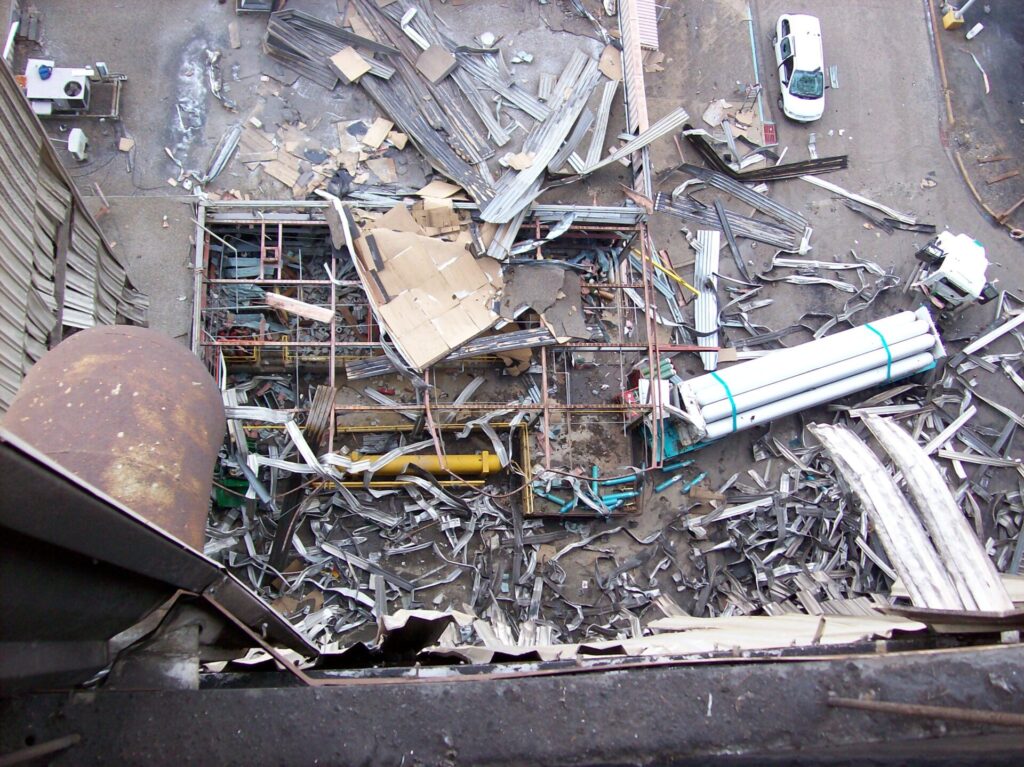
What Happens During a Delayed Ignition
When hydrogen is released but doesn’t ignite right away, three different outcomes are possible:
- Dissipation without ignition
Under the right conditions, the gas can disperse harmlessly. This is the best-case scenario, but by no means guaranteed. - Ignition in an unignited jet
The gas ignites within a turbulent jet, accelerating through the mixture and potentially generating damaging overpressures. This can occur after just a fraction of a second or longer. - Accumulation and ignition in a volume
Hydrogen disperses and mixes with air to form a flammable concentration. Ignition may then result in a flash fire or vapor cloud explosion (VCE) with confinement and/or congestion increasing the overpressure hazard.
“If gas doesn’t ignite immediately, one of three things happens: it may dissipate harmlessly, it may ignite within a turbulent jet, potentially producing damaging overpressures, or it may accumulate and ignite as a flash fire or even a vapor cloud explosion.” — Dani Murphy, WHA
The following high-speed video demonstrates a simulation of hydrogen deflagration, replicating an outdoor or unconfined release of hydrogen into ambient air with congestion.
Categories of Delayed Ignition Hazards
There are three major hazard categories for delayed ignition:
- Jet plume explosions: ignition within a turbulent, high-flow jet, leading to localized blast effects.
- Flash fires: ignition of a dispersed flammable gas cloud, producing severe thermal hazards but little overpressure.
- Vapor cloud explosions (VCEs): ignition of a flammable gas cloud resulting in a damaging blast wave and overpressure. VCEs may occur outdoors with congestion, in semi-confinement, or fully confined indoors or within an enclosure where reflected pressures amplify damage.
Each hazard type presents different risks to people, equipment, and structures — and requires different mitigation strategies. The key to understanding and mitigating delayed ignition hazards is a thorough risk assessment using tools like WHA’s Hydrogen Combustion Risk Assessment (HCRA).
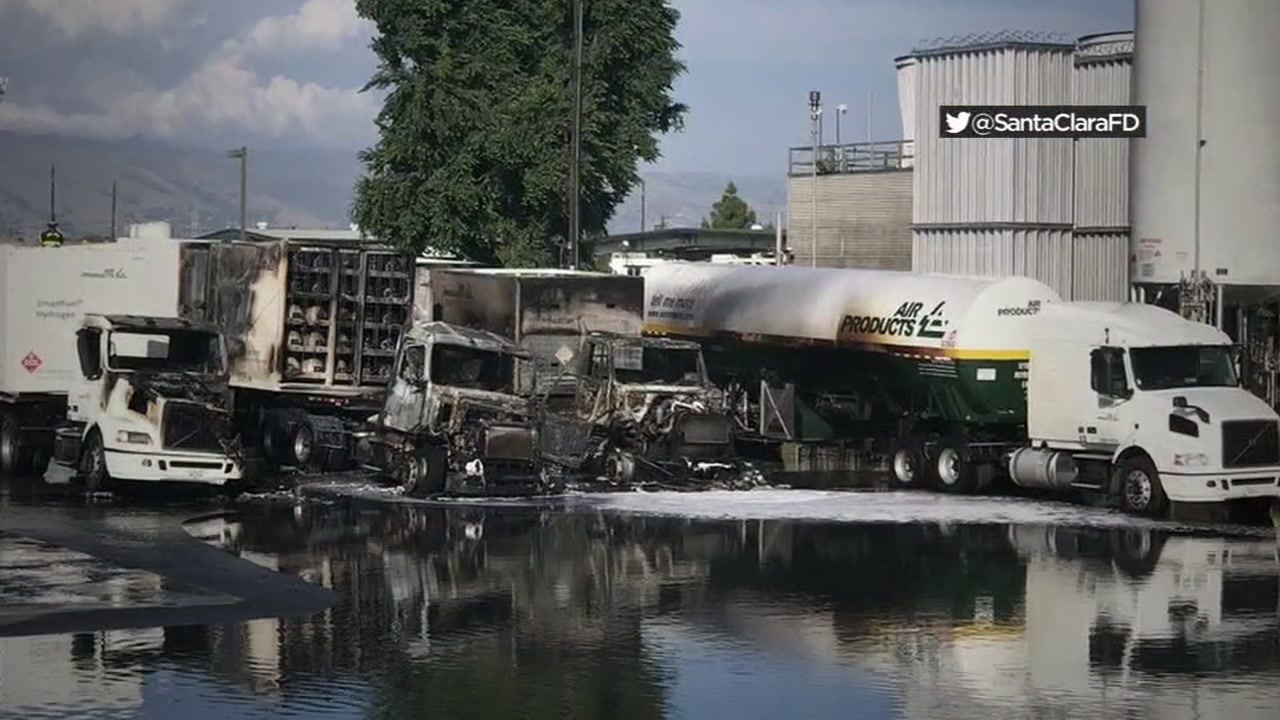
Codes and Standards: A Gap That Must Be Closed
Current codes and standards provide guidance primarily for immediate ignition scenarios — jet fires and thermal hazards. They often fail to directly address the explosion overpressures that can occur after delayed ignition.
Setback distances, firewall requirements, and vent system designs are all typically based on fire hazards. A performance-based approach is needed to capture the real risks of delayed ignition.
WHA and its partners are actively working through codes and standards bodies to help close these gaps, but change takes time. In the meantime, engineers and facility owners must take a proactive approach by considering delayed ignition hazards in their own designs and hazard analyses.
“We need better awareness about delayed ignition and the potential overpressures associated with it.” — Dani Murphy, WHA
Learn More About Delayed Ignition of Hydrogen
A full technical paper on delayed ignition hazards will be published by the Hydrogen Safety Panel at h2tools.org.
As the industry seeks to better understand these hazards, WHA encourages system designers, safety professionals, and regulators to take them seriously and to partner with experienced experts who can help analyze and mitigate the risks.
Contact WHA below to learn more about hydrogen safety training, hazard analysis, and system design reviews.
Share this article
Related Articles

Materials Selection and Compliance in Industrial Oxygen Piping Systems
Because materials can ignite and burn more easily in the presence of oxygen, selecting compatible materials is…

WHA Expert Insights Improve Process Hazard Analyses (PHAs)
If you work with pressurized fluids, you already know that a Process Hazard Analysis (PHA) is a…

What New CSA Group Research Reveals about Hydrogen Leak Testing Gaps
How do we reliably detect, measure, and manage hydrogen leaks? A new CSA Group research study takes…
Request an expert
consultation
Contact us to request a free consultation with an experienced engineer who can help you better understand your needs and our solutions.